Polonca Lovšin
“The Forest in Women’s Hands” and “Mushrooms at the End of the World”
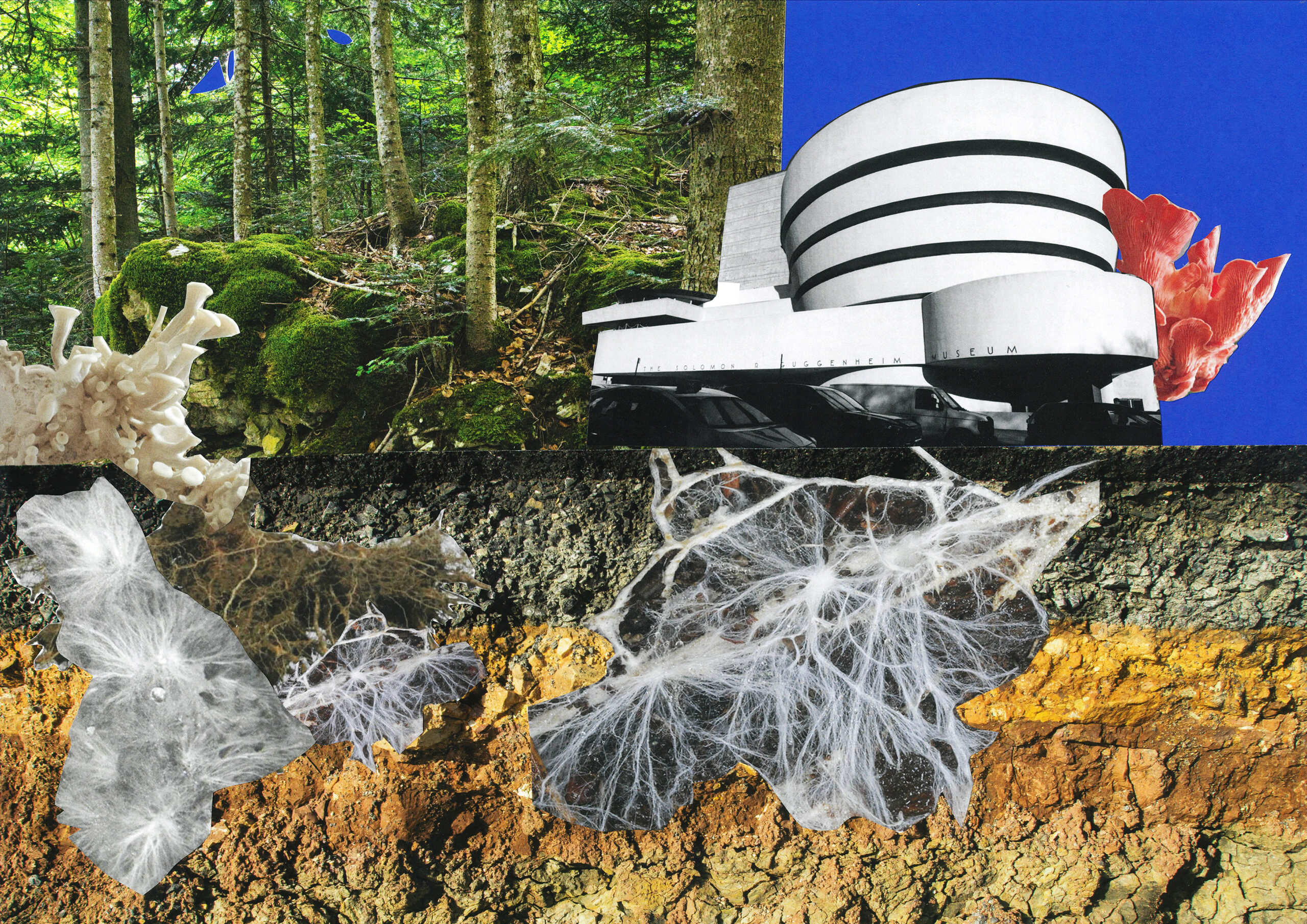
The Forest in Women’s Hands and Mushrooms at the End of the World present new works by the artist and architect Polonca Lovšin, who in recent years has focused on the topic of forests and their importance for the future of our planet. She is interested in the more-than-human perspective and views the forest as a complex ecosystem that reveals the connectedness between humans and other living beings in their environment. Each of the works examines in its own way the relationship between people and the forest.
“The Forest in Women’s Hands”
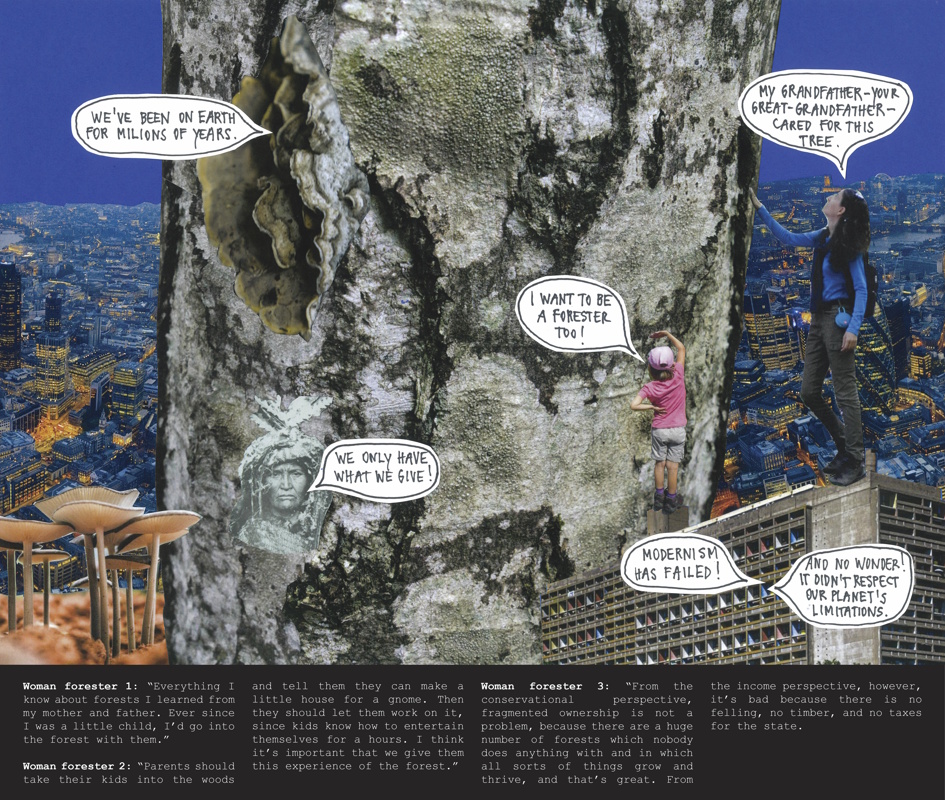
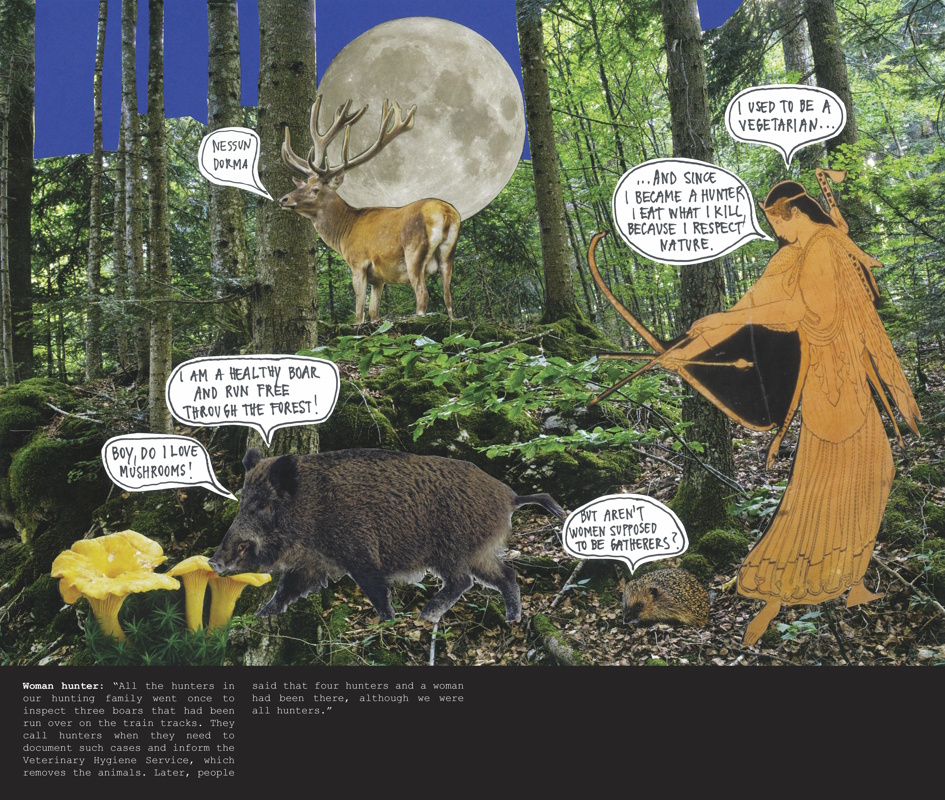
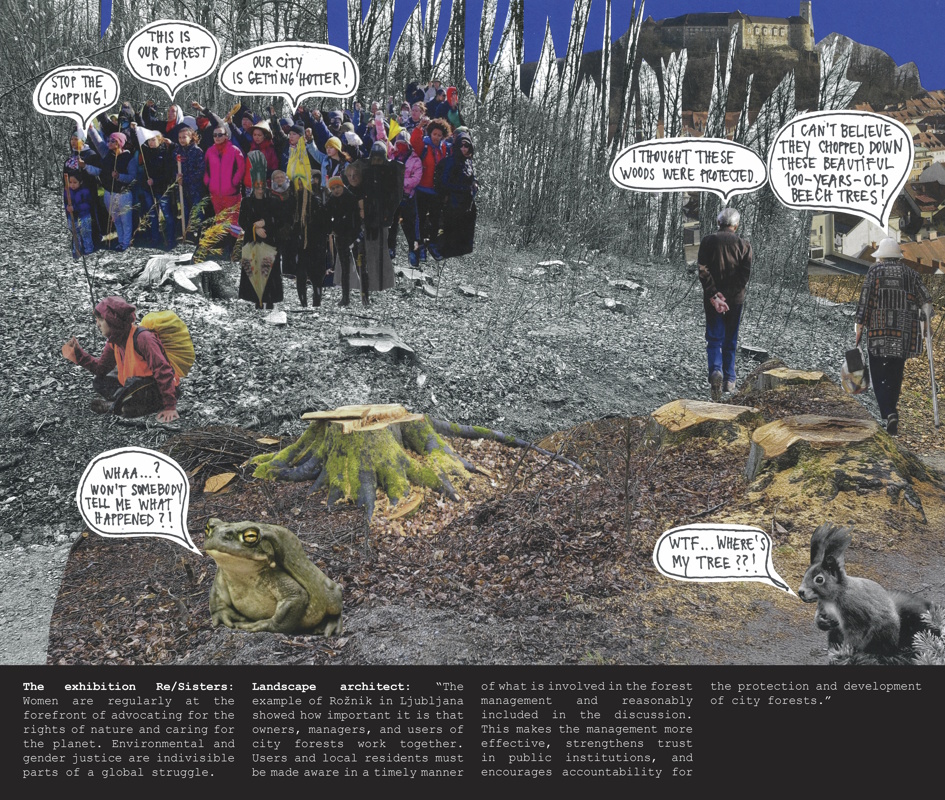
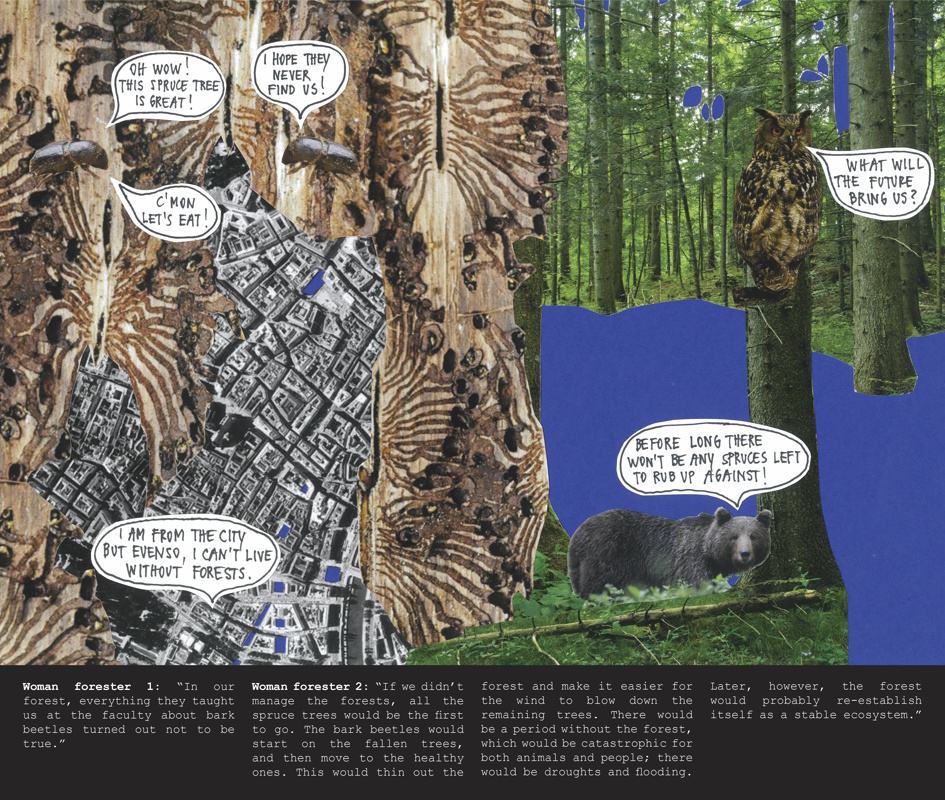
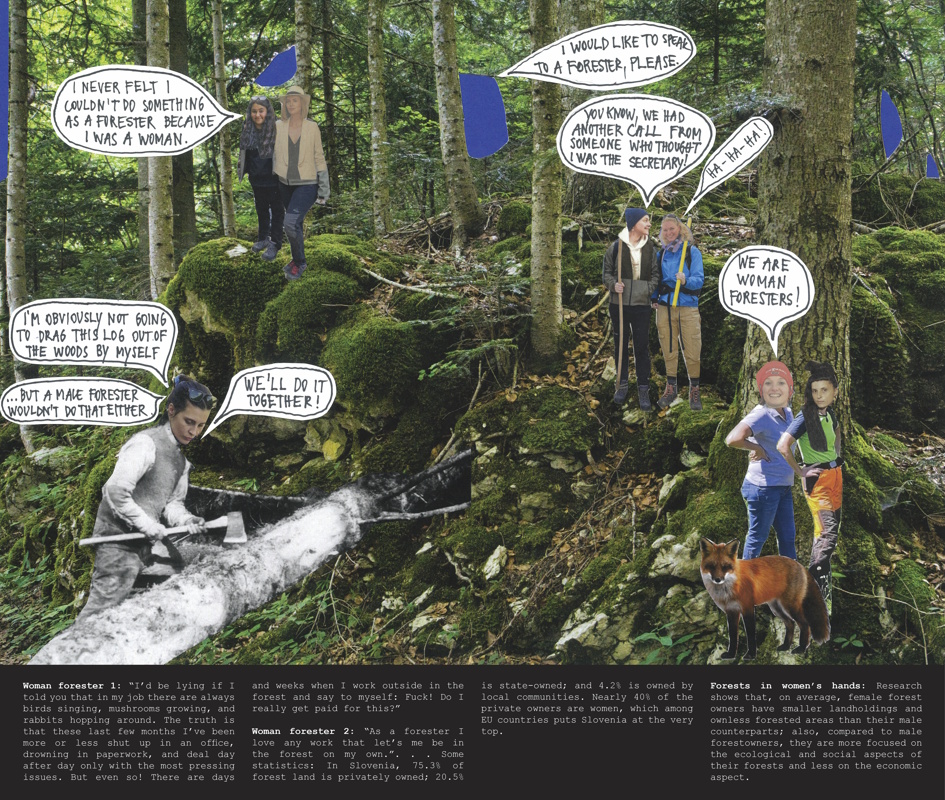
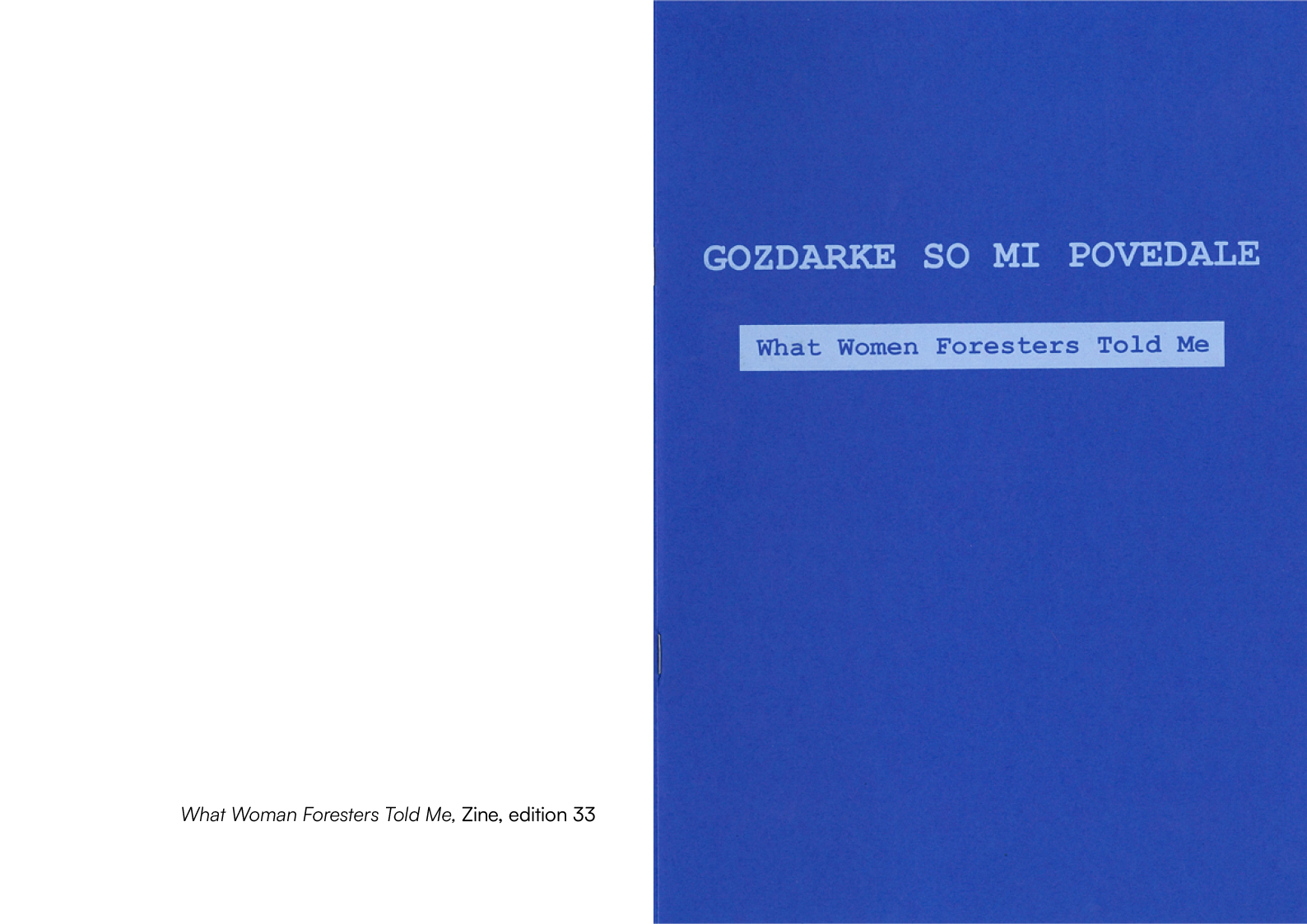
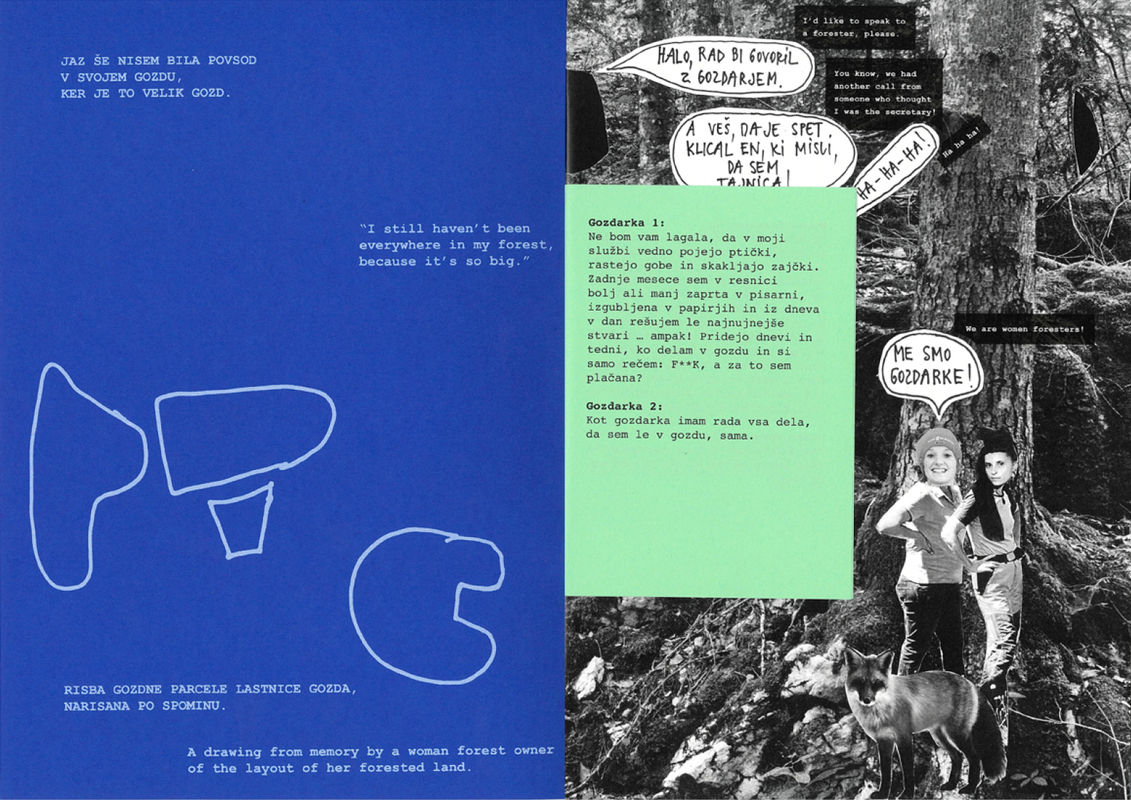
“What Women Foresters Told Me”
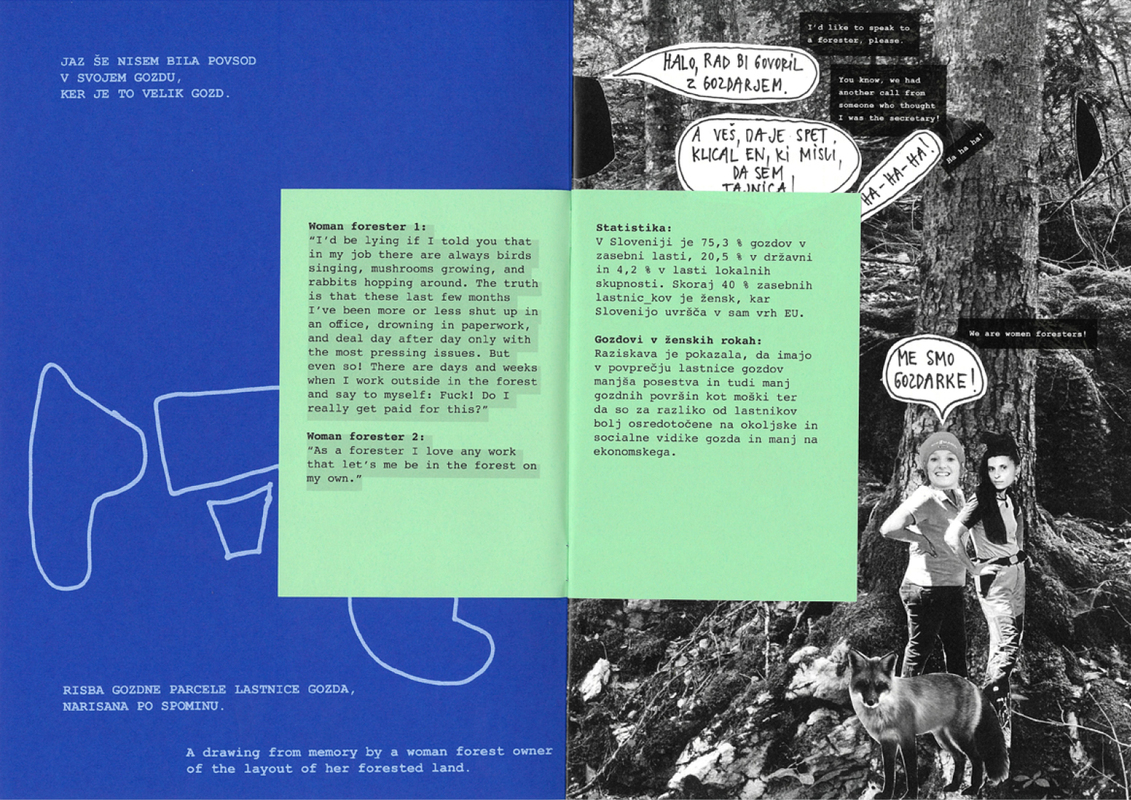
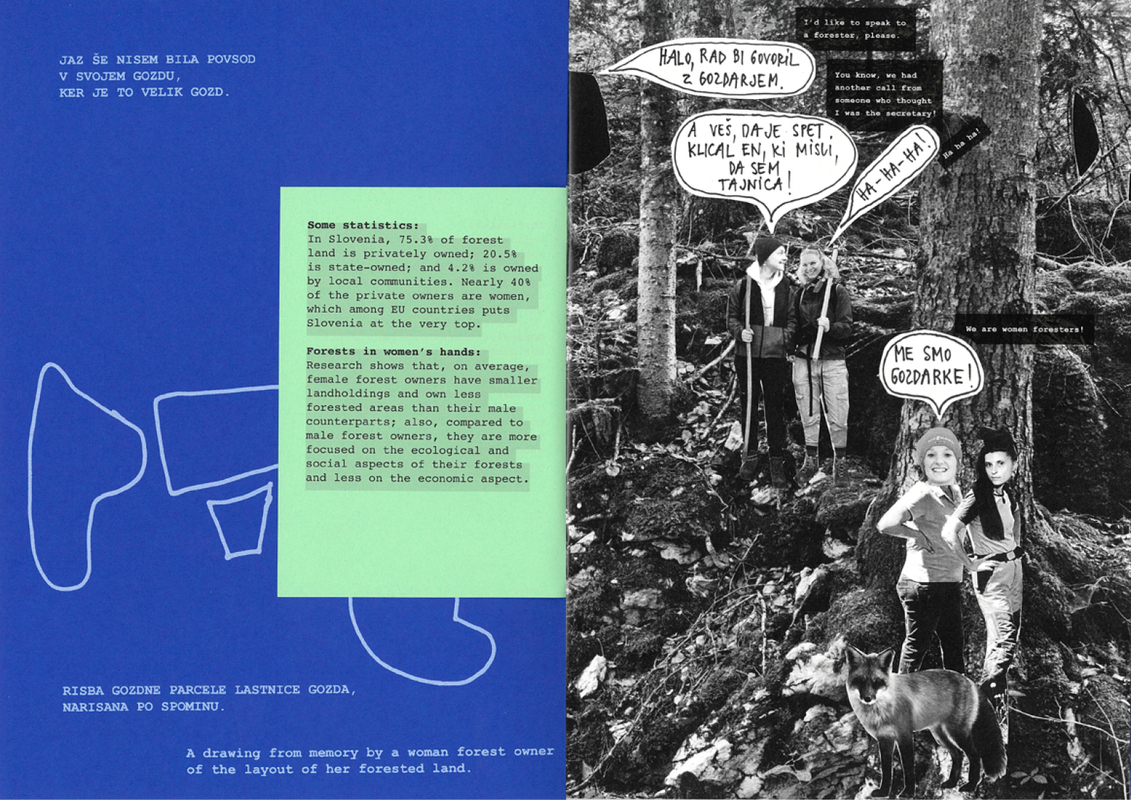
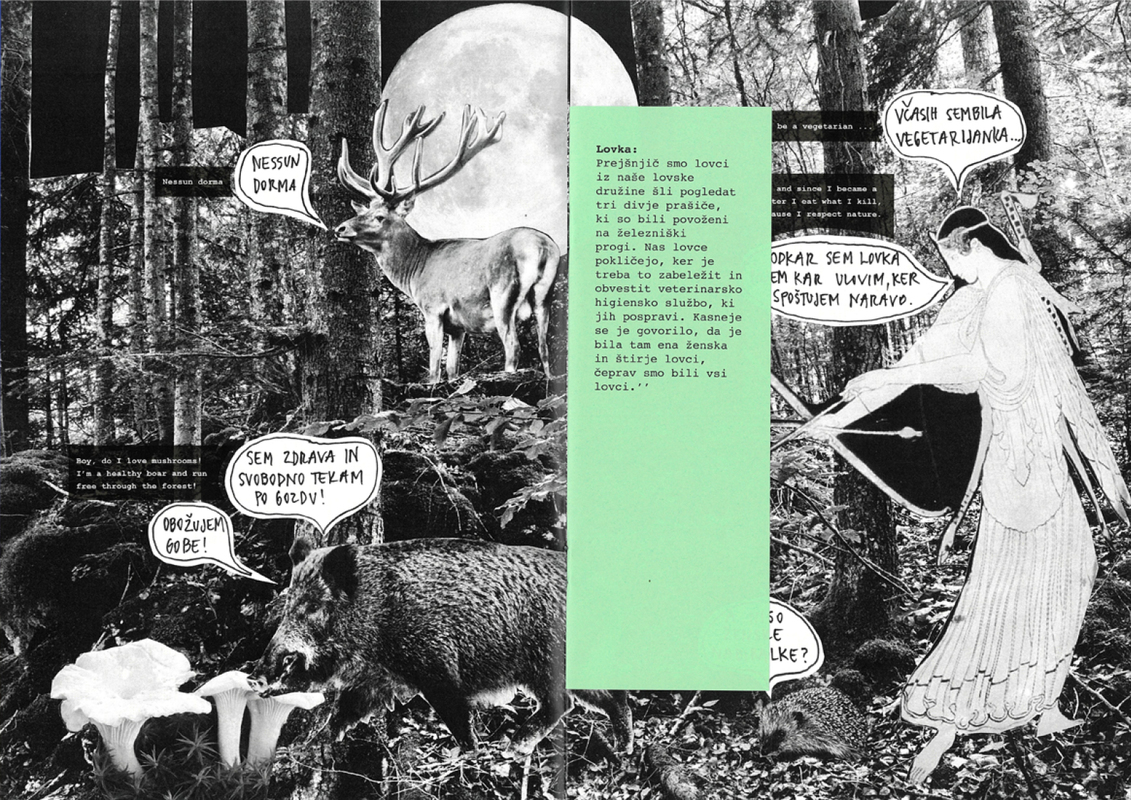

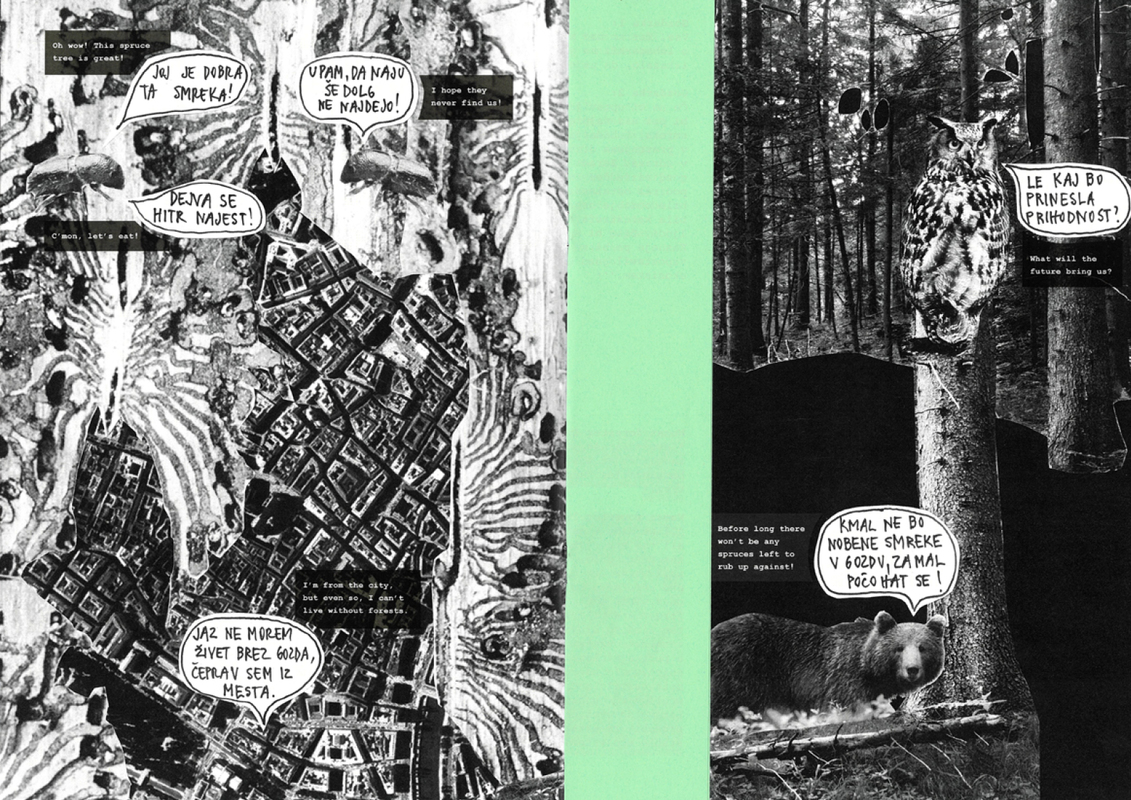

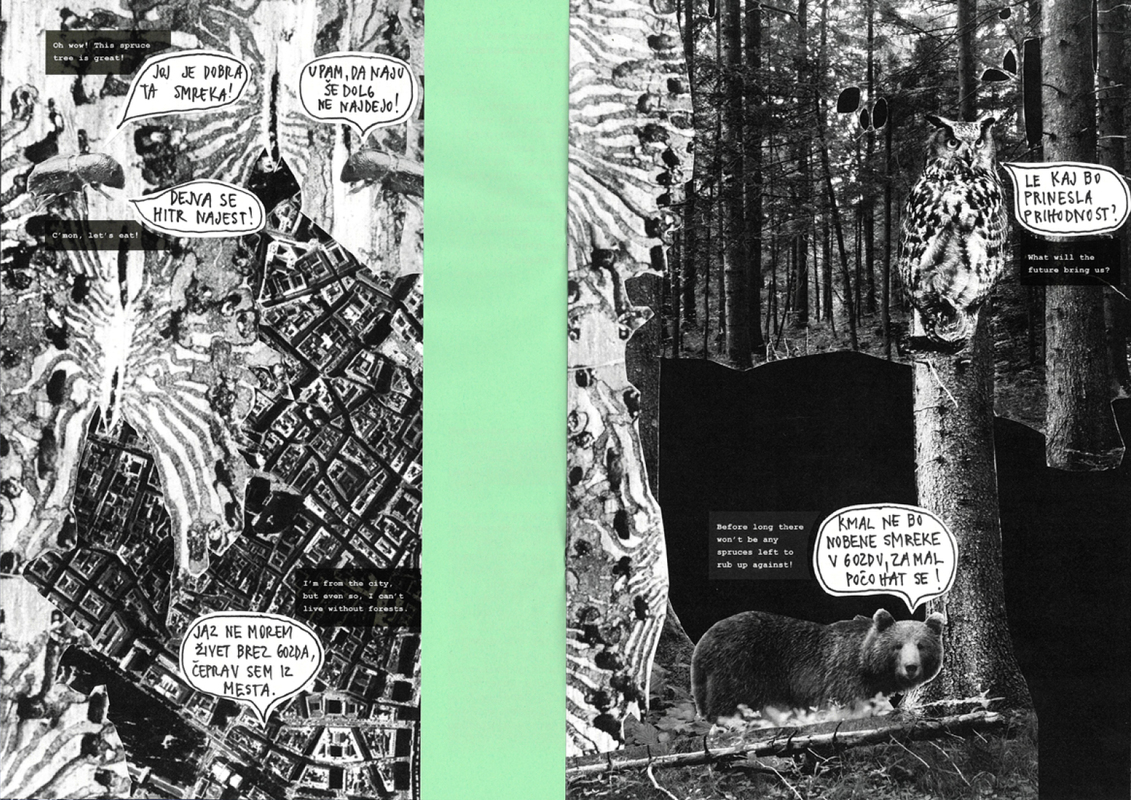
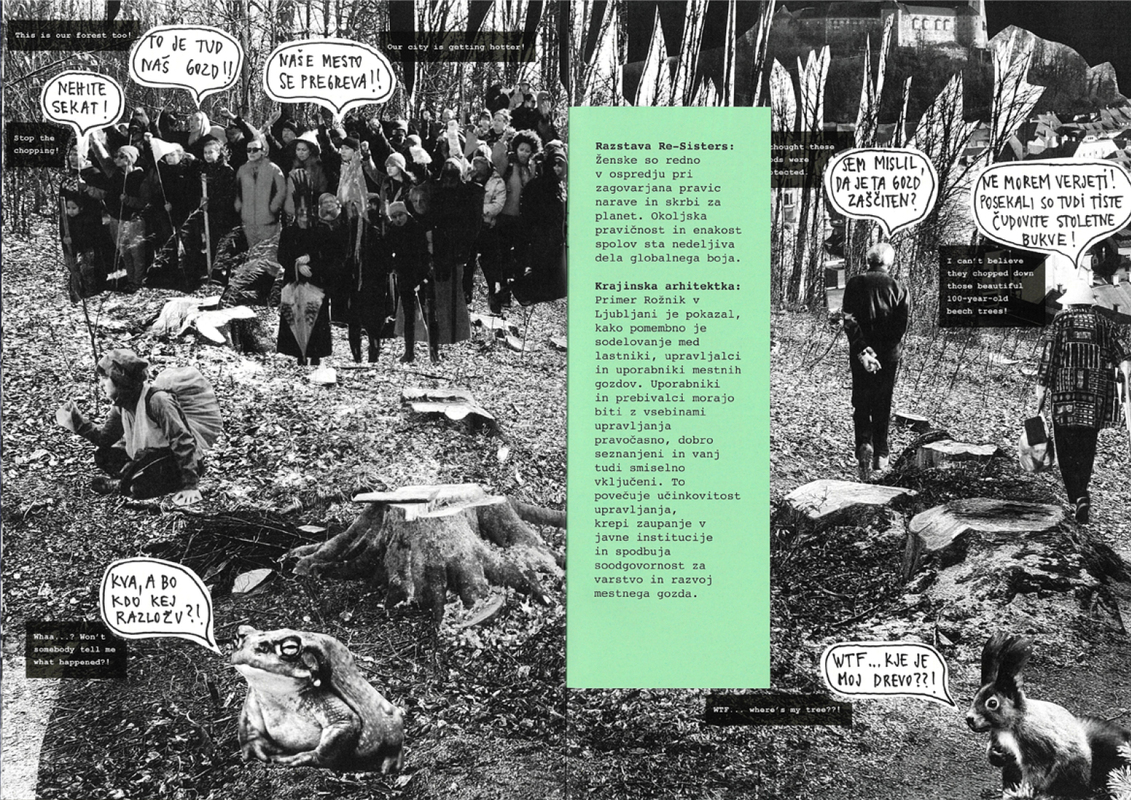

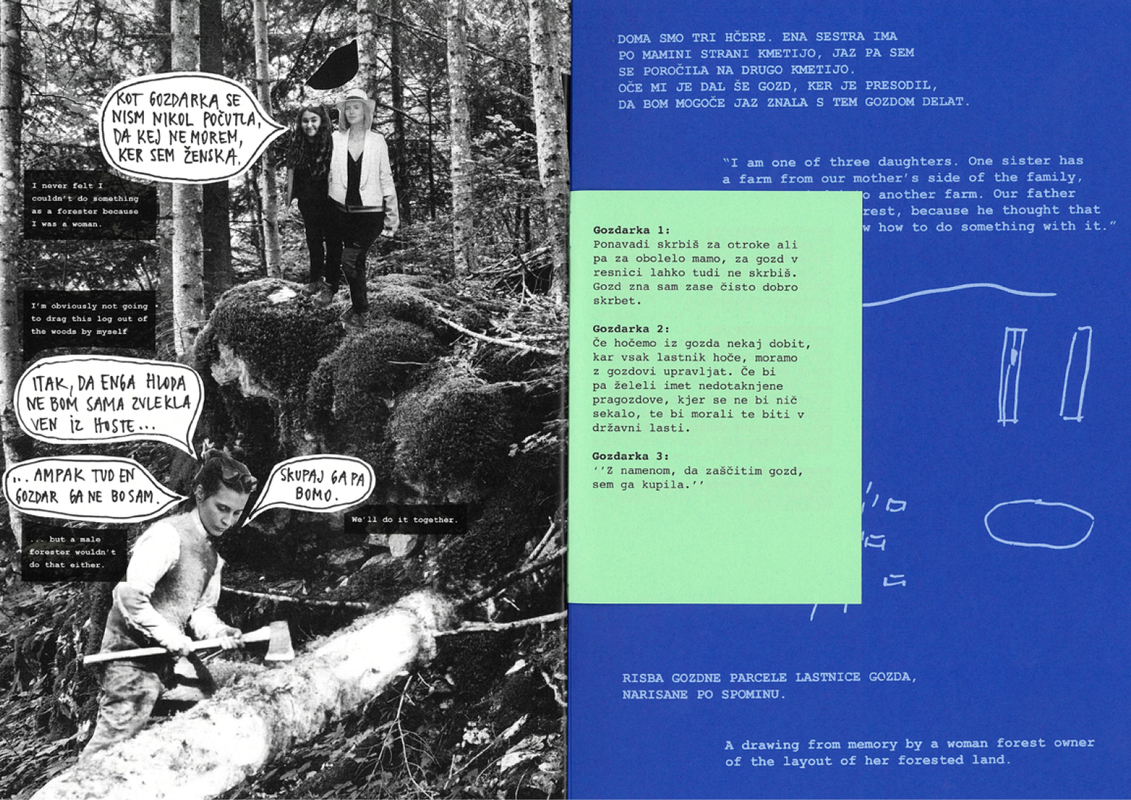
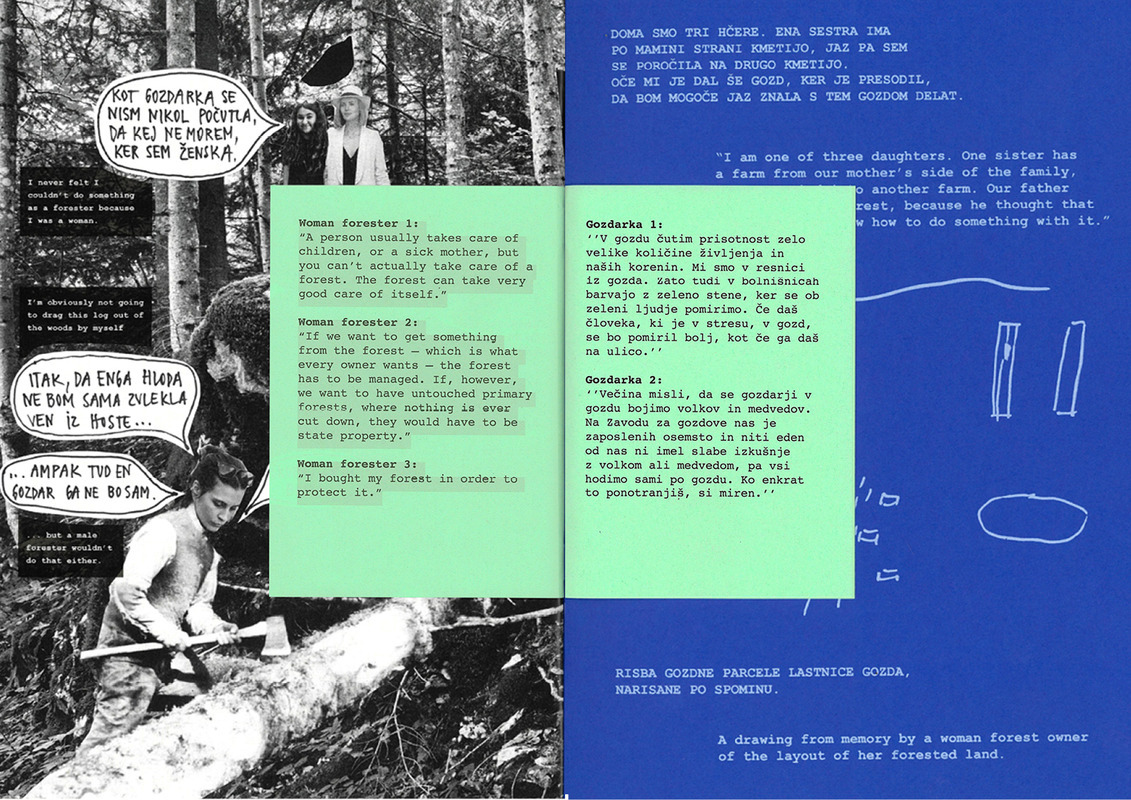


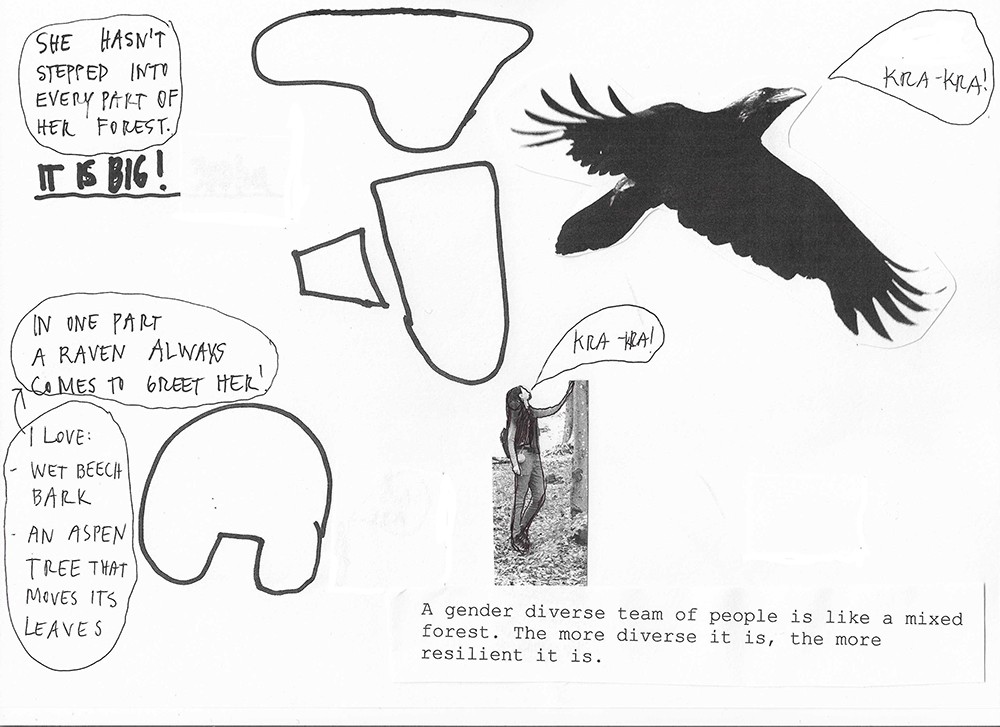

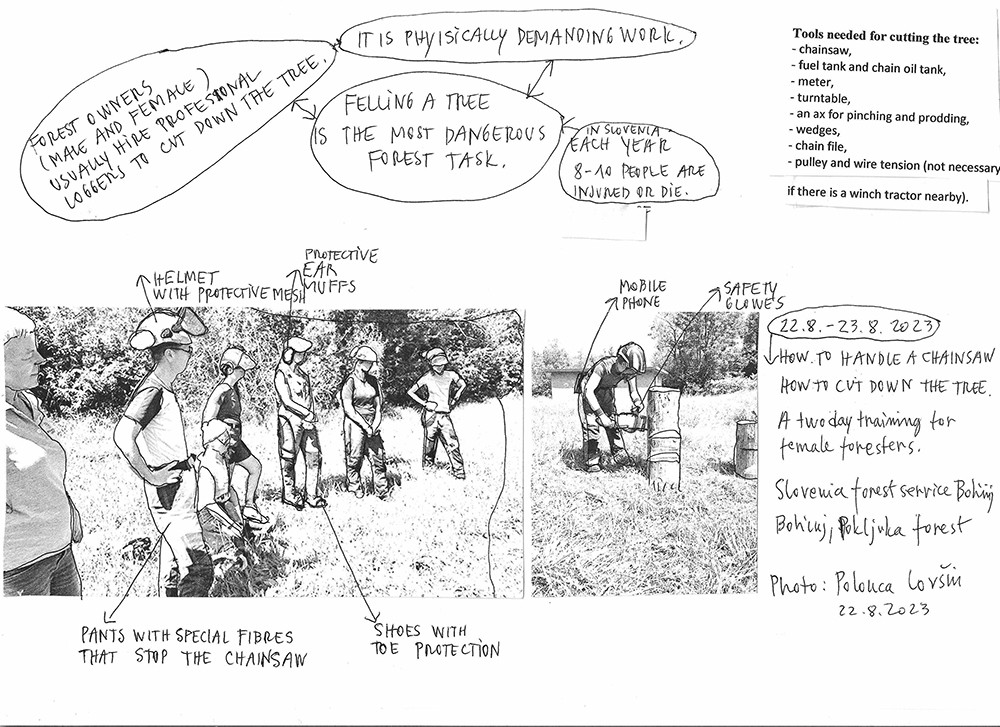
Research sketches
Spotlighting women foresters, hunters, and forest owners in Slovenia, The Forest in Women’s Hands series of collages and the What Women Foresters Told Me zine examine our relationship to forests through the question of gender. In doing so, both rely on research by the Slovenian Forestry Institute, Fem4Forest: Forests in Women’s Hands (2020–22), which shows that, in contrast to their male counterparts, female forest owners are more likely to prioritize the ecological and social functions of their forest land over commercial interests. Both works are based on interviews with women foresters, hunters, and forest owners in Slovenia: Katarina Flajšman, Marija Jakopin, Janja Lukanc, Lucija Odar, and Veronika Valentar.
“Mushrooms at the End of the World”
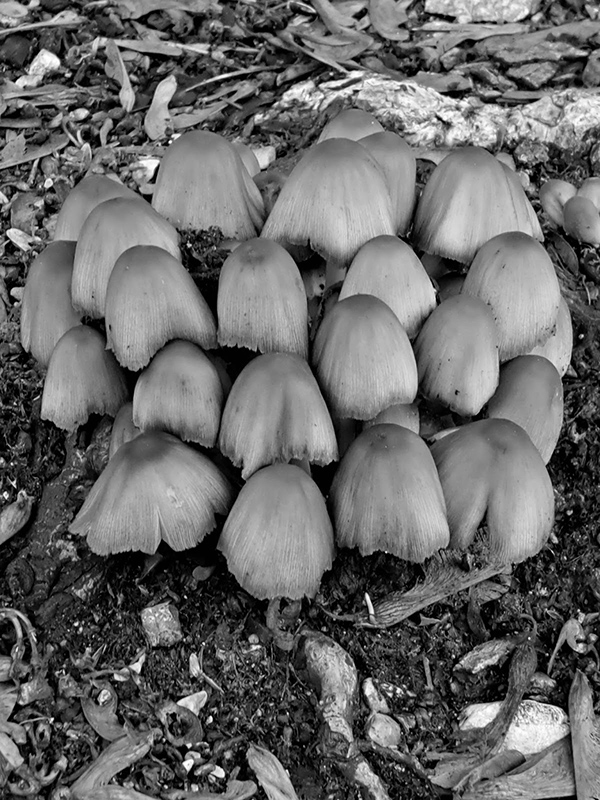
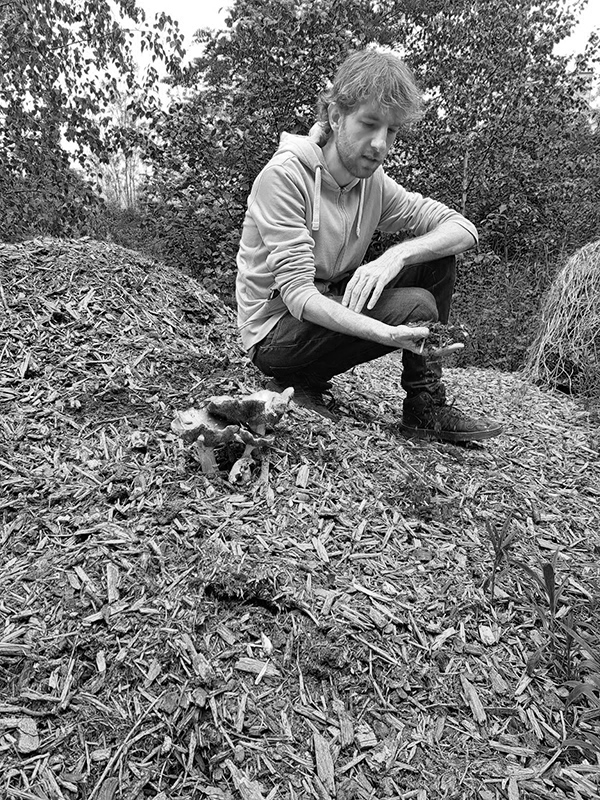
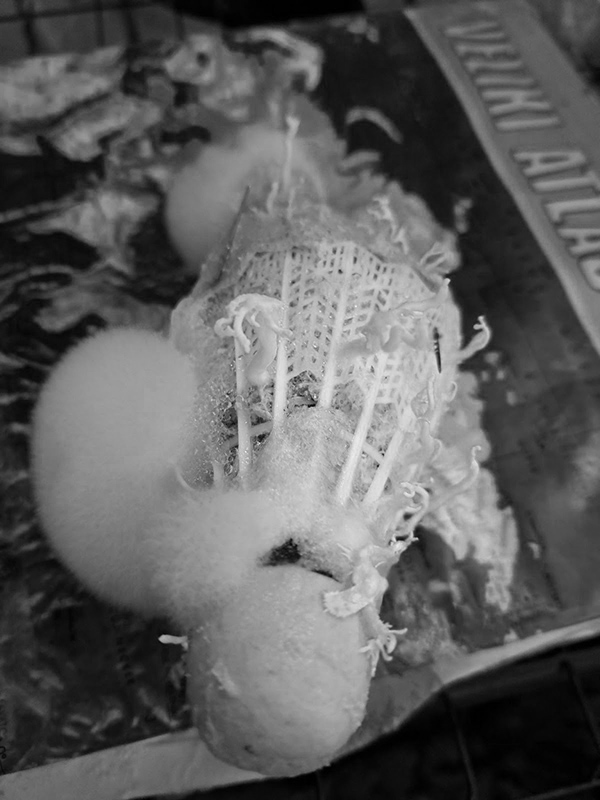

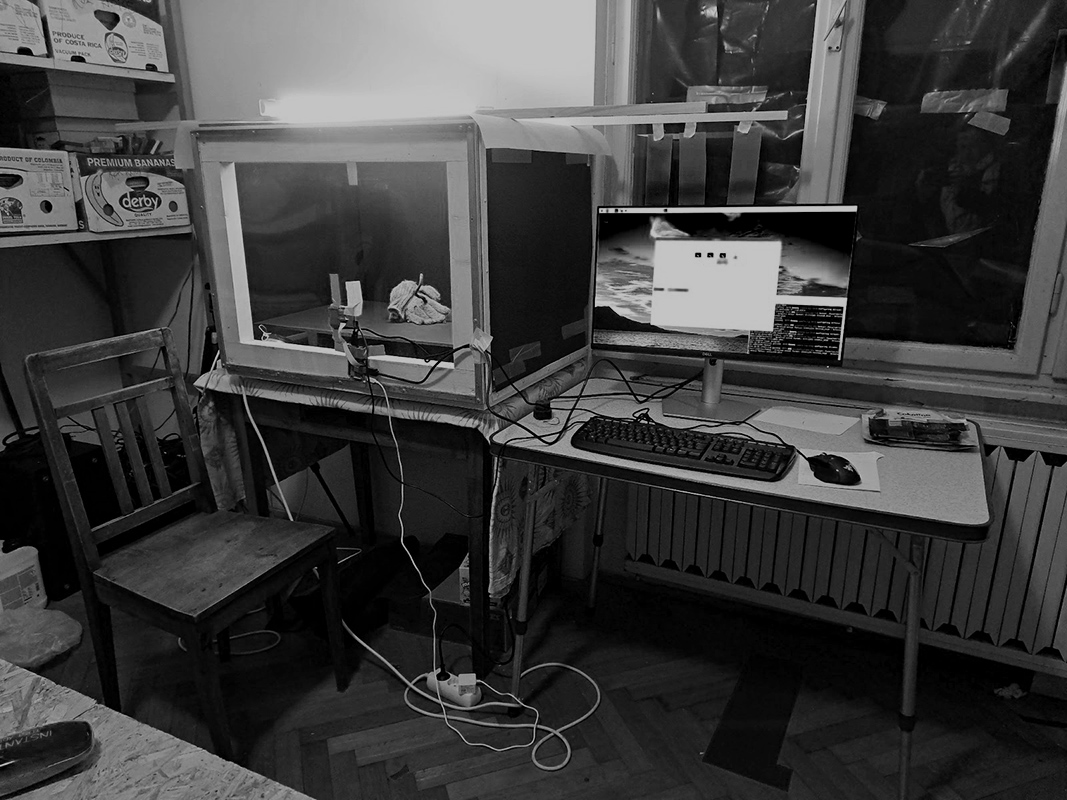

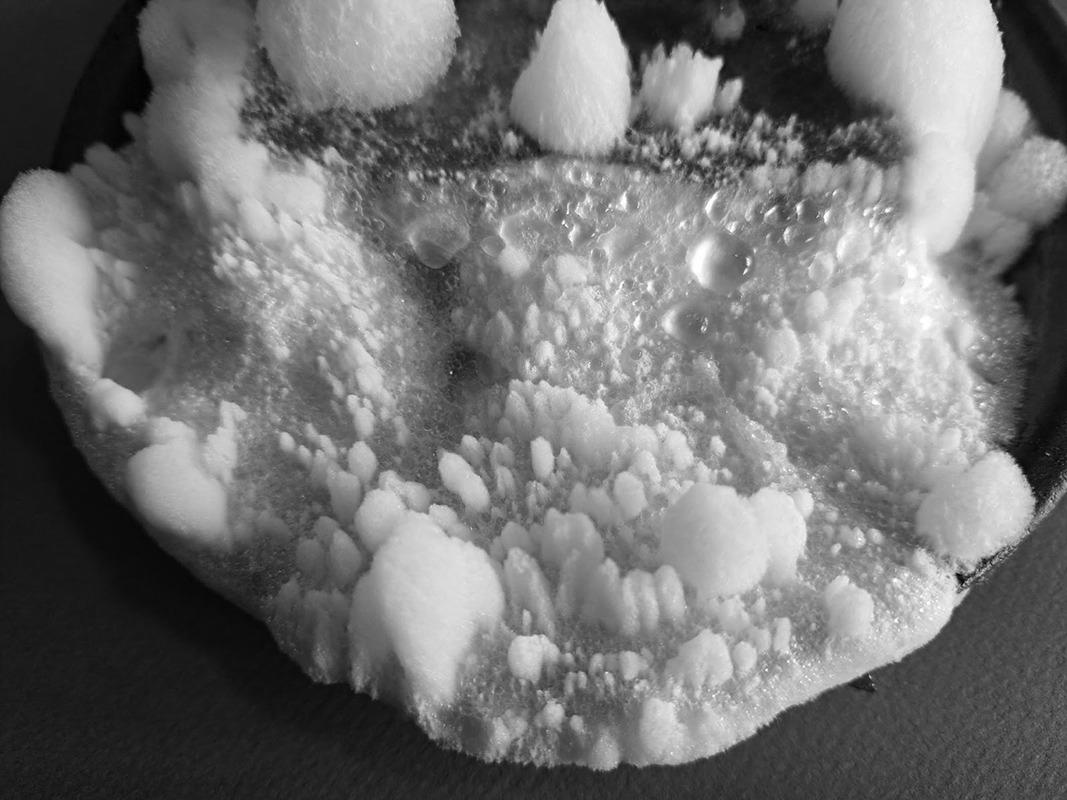

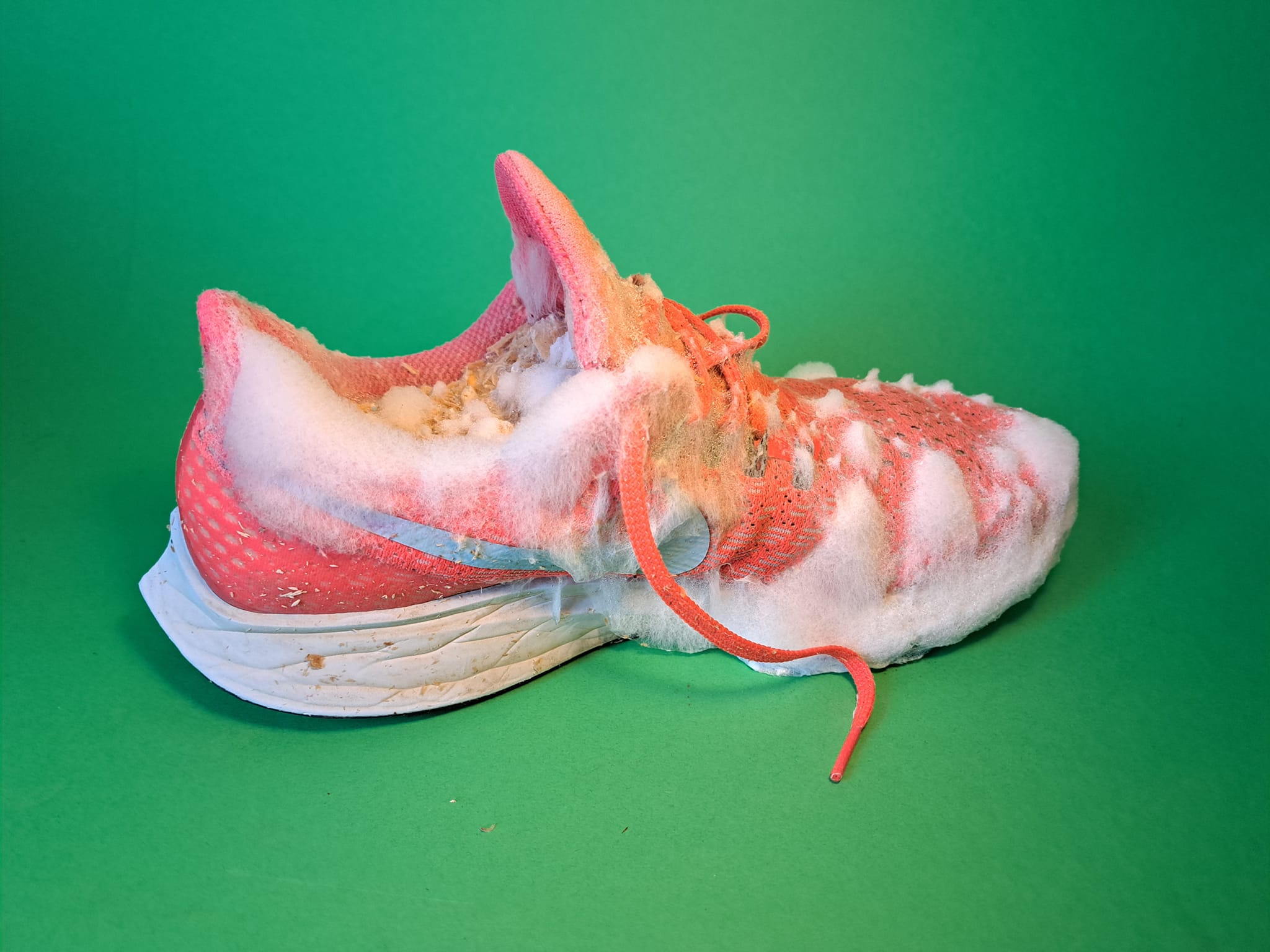
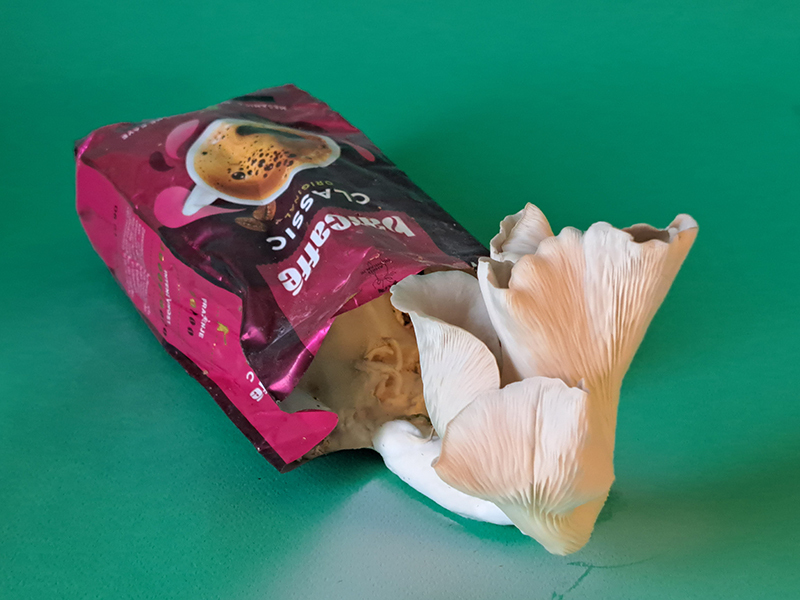
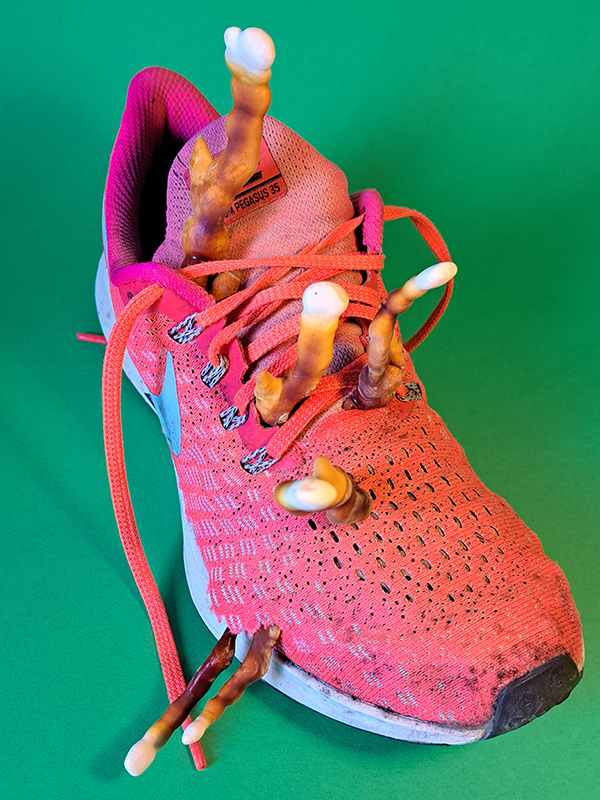
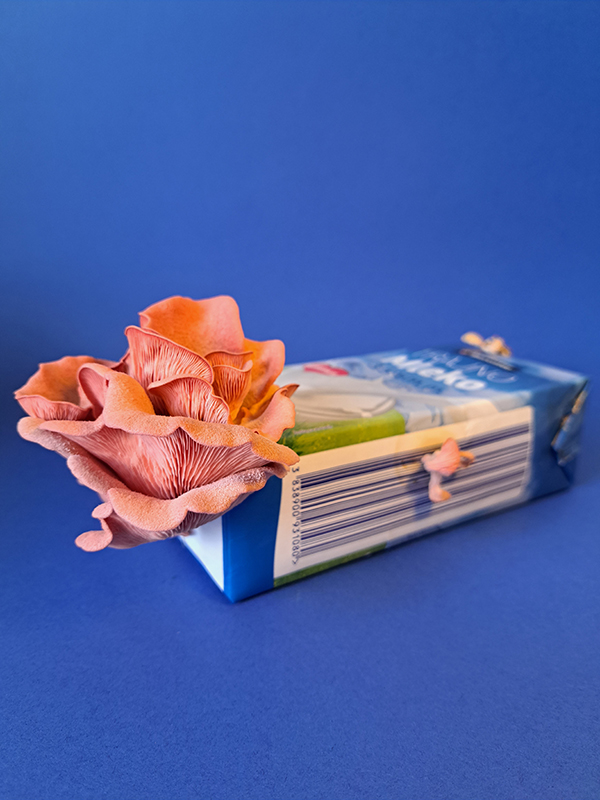
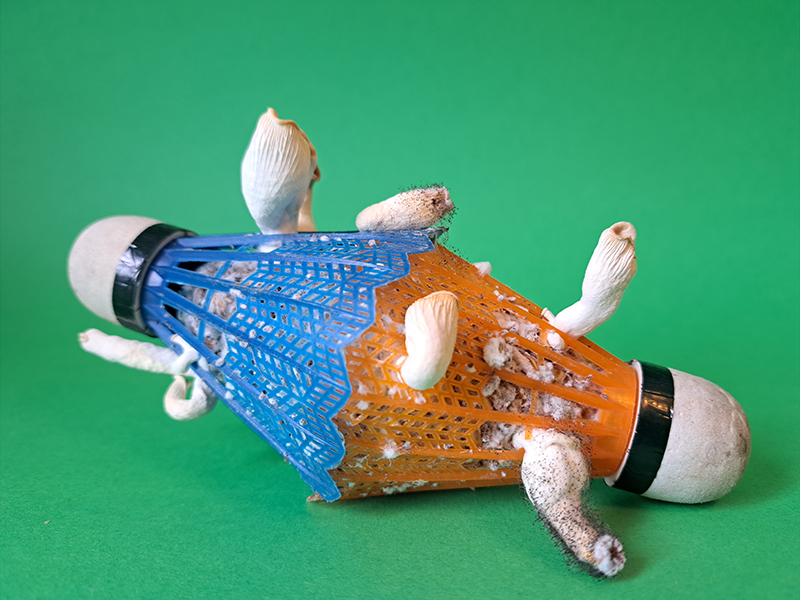
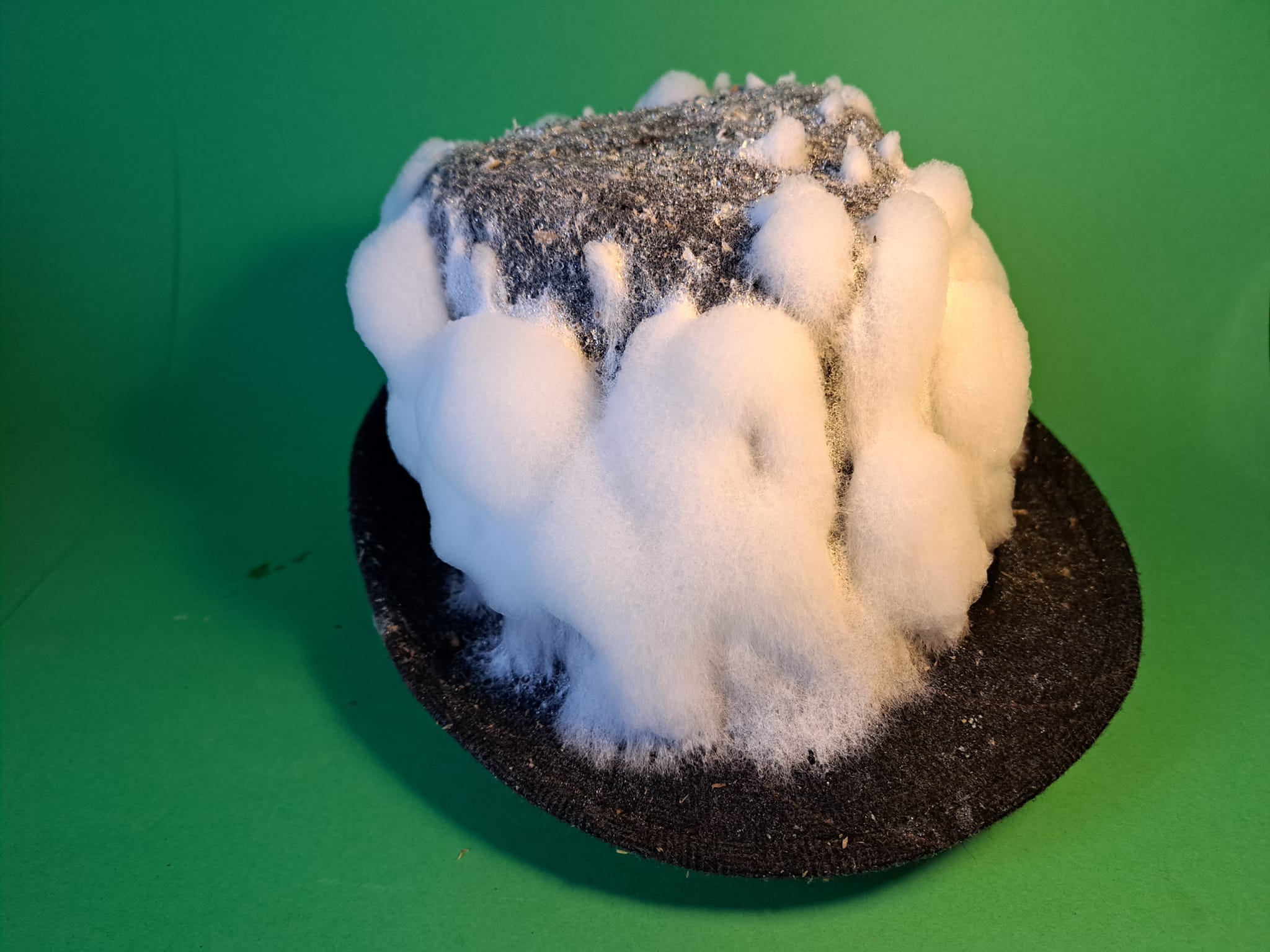
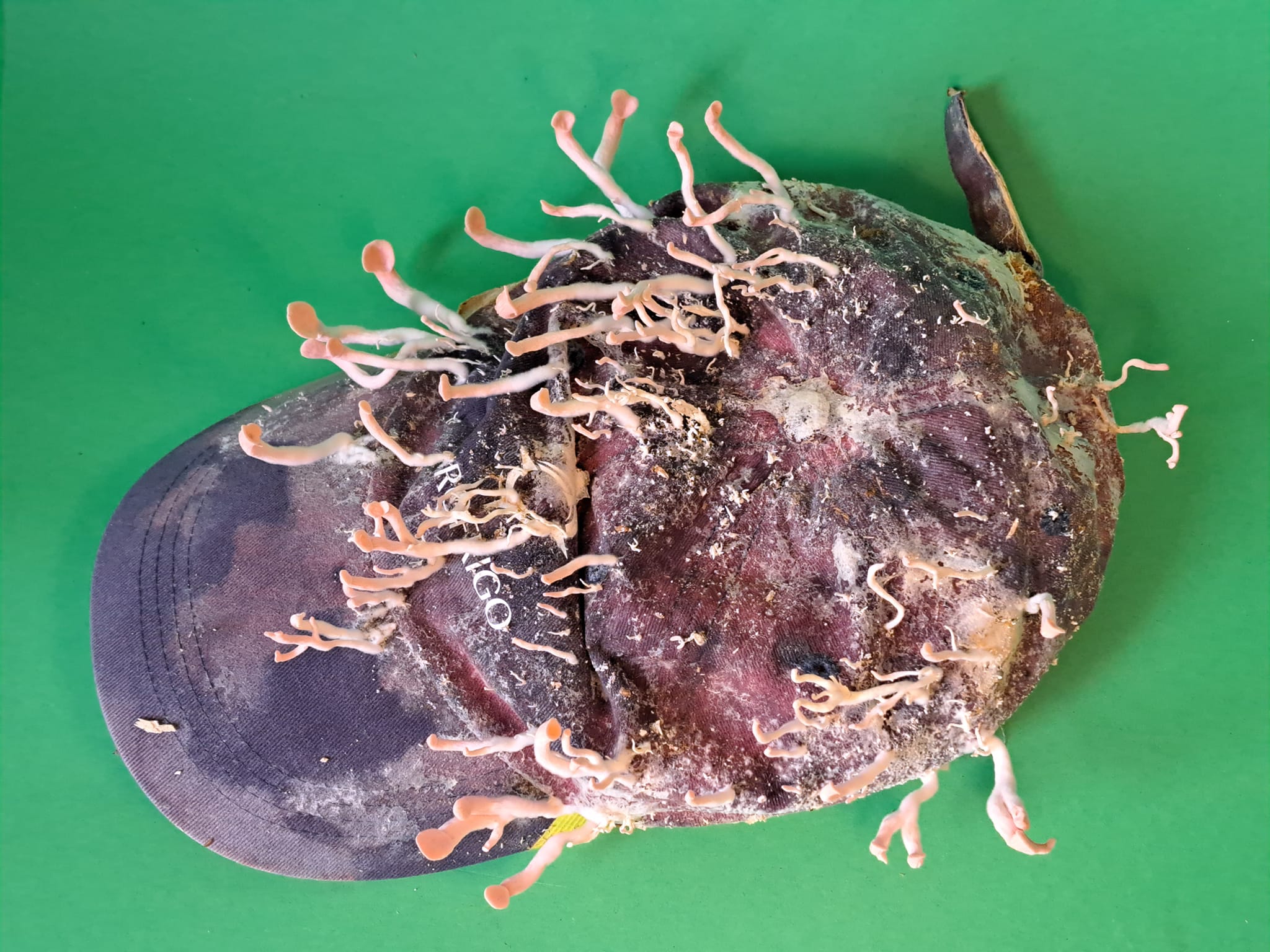
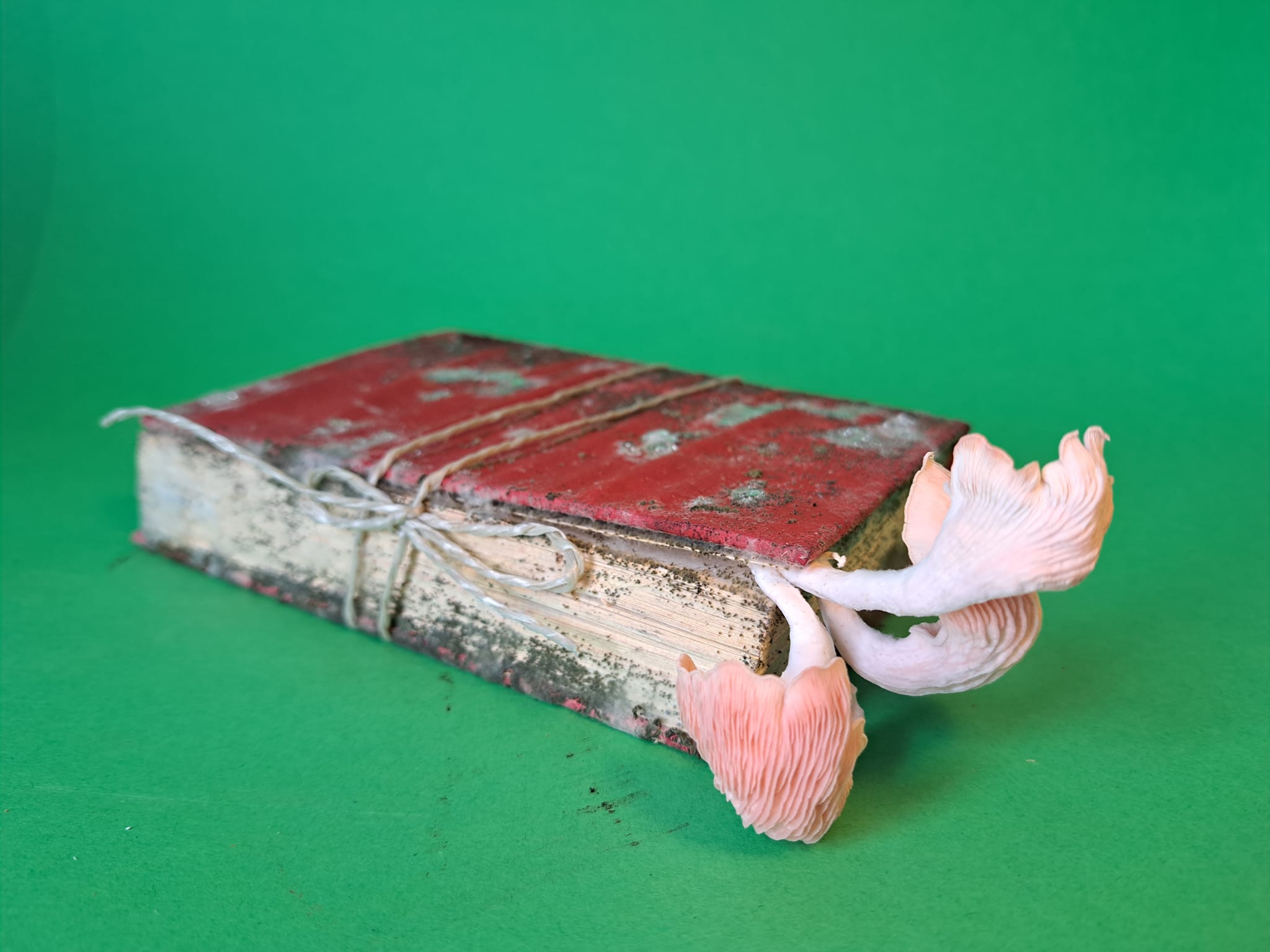
Mushrooms at the End of the World is centred on fungi – organisms that connect all life on earth. Among the planet’s oldest inhabitants, fungi are found everywhere around us and even inside us. They possess incredible transformative power, turning rocks into soil, producing poisons and hallucinations, cleaning radioactive soil, and degrading crude oil and plastic. They are also vital for forests and trees, with which they exchange essential substances for survival. The artwork visualizes the transformation of ordinary human objects, houses, and cities, from which fungi create the fertile soil for a new beginning.
Developed in collaboration with microbiologist Primož Turnšek.
The artwork references the books The Mushroom at The End of the World by the anthropologist Anna L. Tsing and Entangled Life: How Fungi Make Our Worlds, Change Our Minds and Shape Our Futures by the biologist Merlin Sheldrake.
You can view photos of the artistic research results and opening of the exhibition The Forest in Women’s Hands and Mushrooms at the End of the World here.